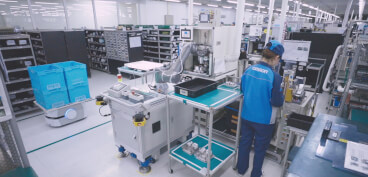
Blog sur l'automatisation
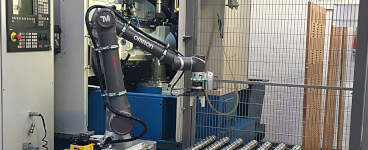
Les cobots offrent un avantage concurrentiel au fabricant d'engrenages
14 mai 2020 Fischer Gears, un fabricant danois d'engrenages, a stimulé la compétitivité de son processus de production, notamment pour les gammes plus importantes, en installant deux robots TM d'Omron. Les robots collaboratifs (cobots) permettent aux employés expérimentés de se consacrer à des tâches à plus forte valeur ajoutée.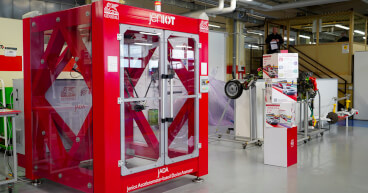
High-speed robot tests the reliability of black boxes
14 mai 2020 A non-destructive alternative to crash tests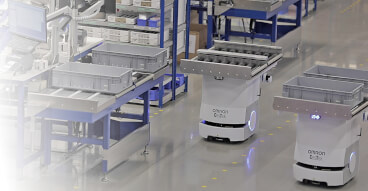
Production sur commande avec une flotte avancée de robots mobiles
11 mai 2020 VOLA, un fabricant danois d'équipements sanitaires et de cuisines de luxe, a ouvert une nouvelle usine dotée d'une flotte de neuf robots mobiles d'Omron.
Stimuler la production européenne de cellules de batterie
1 mai 2020 Que peuvent faire les entreprises automobiles européennes pour assurer la pérennité de leurs lignes de production, notamment pour la fabrication de batteries ? La robotique, le contrôle qualité automatisé et l'intelligence artificielle (IA) peuvent les aider à faire face à la forte concurrence de l'Asie.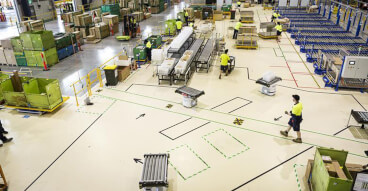
Mobile robots smarten up Toyota’s new parts centre
28 avril 2020 Intelligent robots and sophisticated design are helping Toyota to achieve a higher level of efficiency at its new warehouse in Sydney, Australia.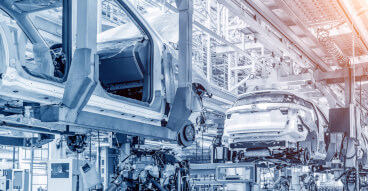
Integrated data control, motion control and machine vision for next-generation automotive production line
24 avril 2020 The Mexican regional headquarters of a leading manufacturer of premium air brake actuators for global on-highway and specialty markets required a new automated production assembly line. One of the company’s key performance indicators is to deliver a fully assembled product every 30 seconds, and it is with this end goal at the forefront that the team started the process of automating the production line.
Cobot et production flexible: pérenniser des PME ?
17 mars 2020 De nombreux pays d'Europe, comme le Royaume-Uni et l'Allemagne, risquent de connaître de graves pénuries de main-d'œuvre au cours de la prochaine décennie, en particulier en ce qui concerne les spécialistes techniques. Par ailleurs, le cycle de vie des produits est de plus en plus court. Malgré cela, les petites et moyennes entreprises (PME) peuvent être réticentes à investir dans un processus d'automatisation supplémentaire. Pourtant, les robots collaboratifs (cobots) sont faciles à installer et offrent une solution rapide et économique. Ils sont capables d'accroître la flexibilité, la qualité et la vitesse de production et permettent aux entreprises de réagir rapidement à l'évolution des conditions du marché. Les cobots de la série TM d'Omron illustrent parfaitement cette polyvalence.
ŠKODA AUTO utilise le robot mobile d'Omron dans son usine de Vrchlabí
17 mars 2020 Le robot autonome contribue à l'amélioration continue de la sécurité au travail dans l'usine de Vrchlabí et permet de minimiser les risques. Il distingue les personnes se trouvant sur sa trajectoire, ainsi que les véhicules et les obstacles fixes.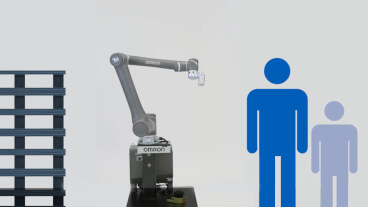
Safety in collaborative applications
10 février 2020 Collaborative robots can be used in a wide range of industrial applications. Thanks to various integral safety features, they can work safely with or near people. In addition, they can easily adapt to changing needs. This results in increased productivity, especially in repetitive tasks, enabling manufacturers to reap the benefits of a high return on their investment. However, for a cobot application to be successful, it must incorporate safety considerations based on comprehensive risk assessments. So, what are the industry safety standards and solutions that will enable a company to gain the maximum value from cobots within a collaborative workspace?
Green is key: sustainability in battery manufacturing for E-mobility
5 février 2020 Today, sustainability is no longer a niche topic, but something that companies are integrating into their business strategies. Not only are sustainability practices necessary to answer the changing demands of consumers, the marketplace and governments, they are also increasingly being seen as a competitive strength. That’s because sustainability practices reduce energy consumption and waste, and also help companies use their resources more efficiently. They even help companies optimize their manufacturing agility and enable them to respond to fluctuating demand and the growing need for personalization. And finally, sustainability can play an important role in acquiring and retaining customers, as well in developing new market opportunities.
The factory of the future: people and machines working together in harmony
20 janvier 2020 Automation and artificial intelligence (AI) are transforming the efficiency of industrial production, through stronger interactions between man and machine that can boost productivity. A new, promising model for ‘factory harmony’ is based on intelligent, integrated and interactive design for tomorrow's manufacturing processes.